SERENGETI NATIONAL PARK
Where the Wild Things Are
There are places on this earth that exist beyond the reach of adequate description — places so vast, so ancient, so teeming with life, and so suffused with a quality of natural grandeur that every attempt to capture them in words falls short in a way that is simultaneously frustrating and entirely appropriate. The Serengeti National Park is one of those places. Covering an extraordinary 14,750 square kilometres of northern Tanzania, the Serengeti is not merely a national park or a wildlife destination or even one of the world’s great natural wonders — it is something more fundamental and more irreducible than any of those labels suggest. It is the living, breathing, endlessly unfolding story of life on earth at its most raw, its most abundant, and its most magnificent, playing out across a landscape so beautiful and so vast that it makes the human being standing within it feel simultaneously infinitesimally small and profoundly, gratefully alive.
The Serengeti was designated a UNESCO World Heritage Site in 1981 and a Biosphere Reserve in 1981, recognitions that reflect the extraordinary ecological significance of an ecosystem that has been functioning without fundamental disruption for millions of years. It is the oldest ecosystem on earth whose essential character — the grasslands, the woodlands, the rivers, the wildlife — has remained largely unchanged since the last ice age, and this ancient continuity gives the Serengeti a quality of permanence and solidity that the modern world, with its relentless pace of change and its shrinking wild spaces, finds both humbling and deeply reassuring.
The Landscape: An Ocean of Grass
The name Serengeti derives from the Maasai word Siringet, meaning endless plains, and it is a name of extraordinary accuracy. The defining landscape of the Serengeti is the grassland — a vast, sweeping, apparently limitless expanse of golden grass that stretches to every horizon under a sky of such theatrical grandeur that it seems almost too large, too vivid, and too dramatically lit to be entirely real. The grass of the Serengeti is not uniform in character — it ranges from the short, nutrient-rich cropped grass of the southern plains, where the Great Migration’s calving season takes place each January and February, to the tall, golden, wind-rippled grass of the central Serengeti, to the dense, fire-managed grasslands of the north that sustain the enormous herds during the July-to-October dry season.
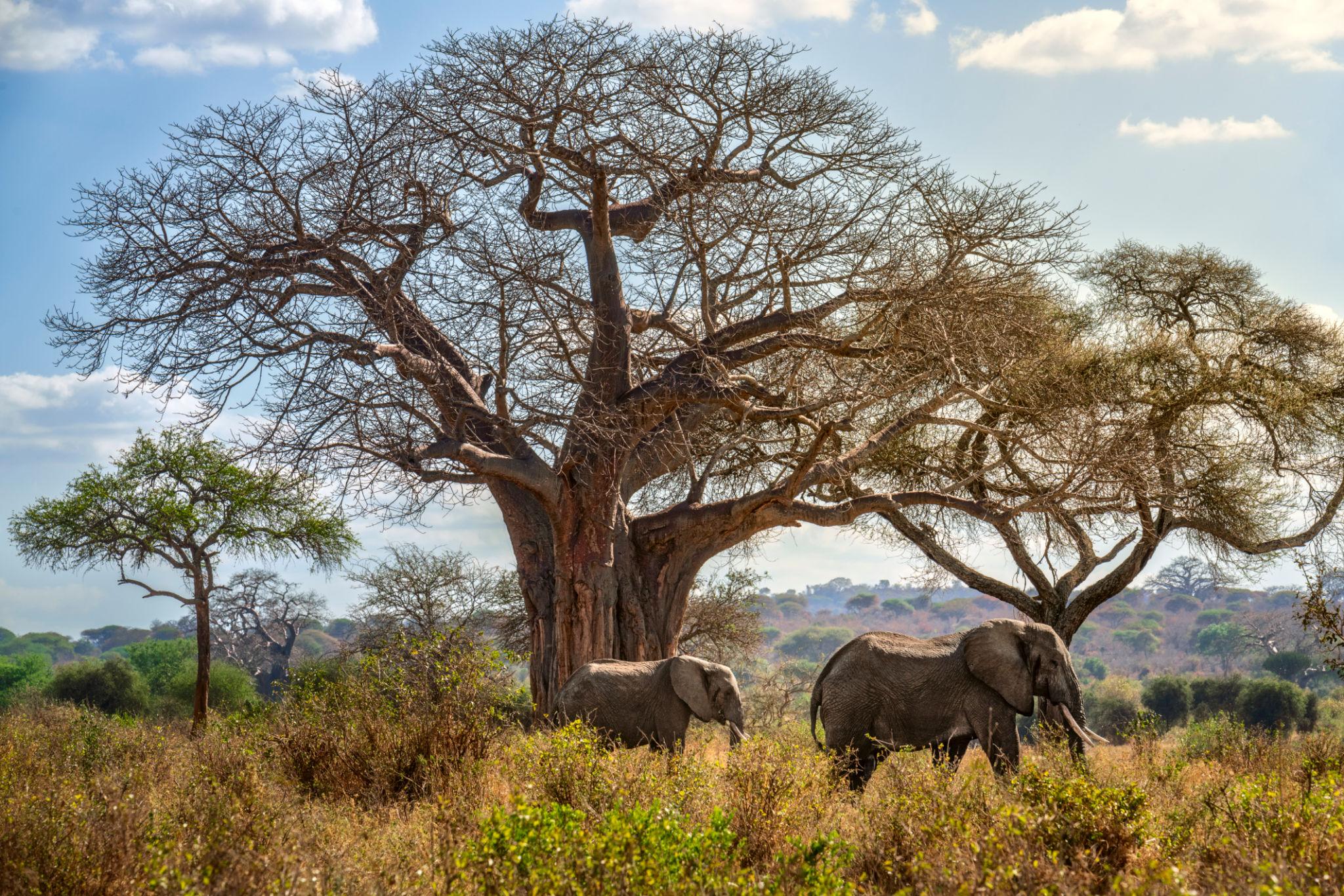
But the Serengeti is far more than its famous plains. The park encompasses a remarkable diversity of habitats within its vast borders — dense riverine forests along the Seronera, Grumeti, and Mara rivers that provide habitat for leopards, baboons, and an extraordinary diversity of bird species; rocky kopjes rising from the grassland like prehistoric islands, their boulder faces alive with rock hyraxes, klipspringers, and the lions that use them as lookout and resting points; acacia woodlands in the western corridor that shelter giraffes, elephants, and the full complement of African ungulates; and the vast, elevated Loliondo and Lobo areas of the northeastern Serengeti, where the landscape takes on a more open, undulating character and wildlife moves with a freedom and a spaciousness that makes even the most jaded safari veteran feel the full, fresh force of the African wilderness.
The Great Migration: Nature’s Greatest Show
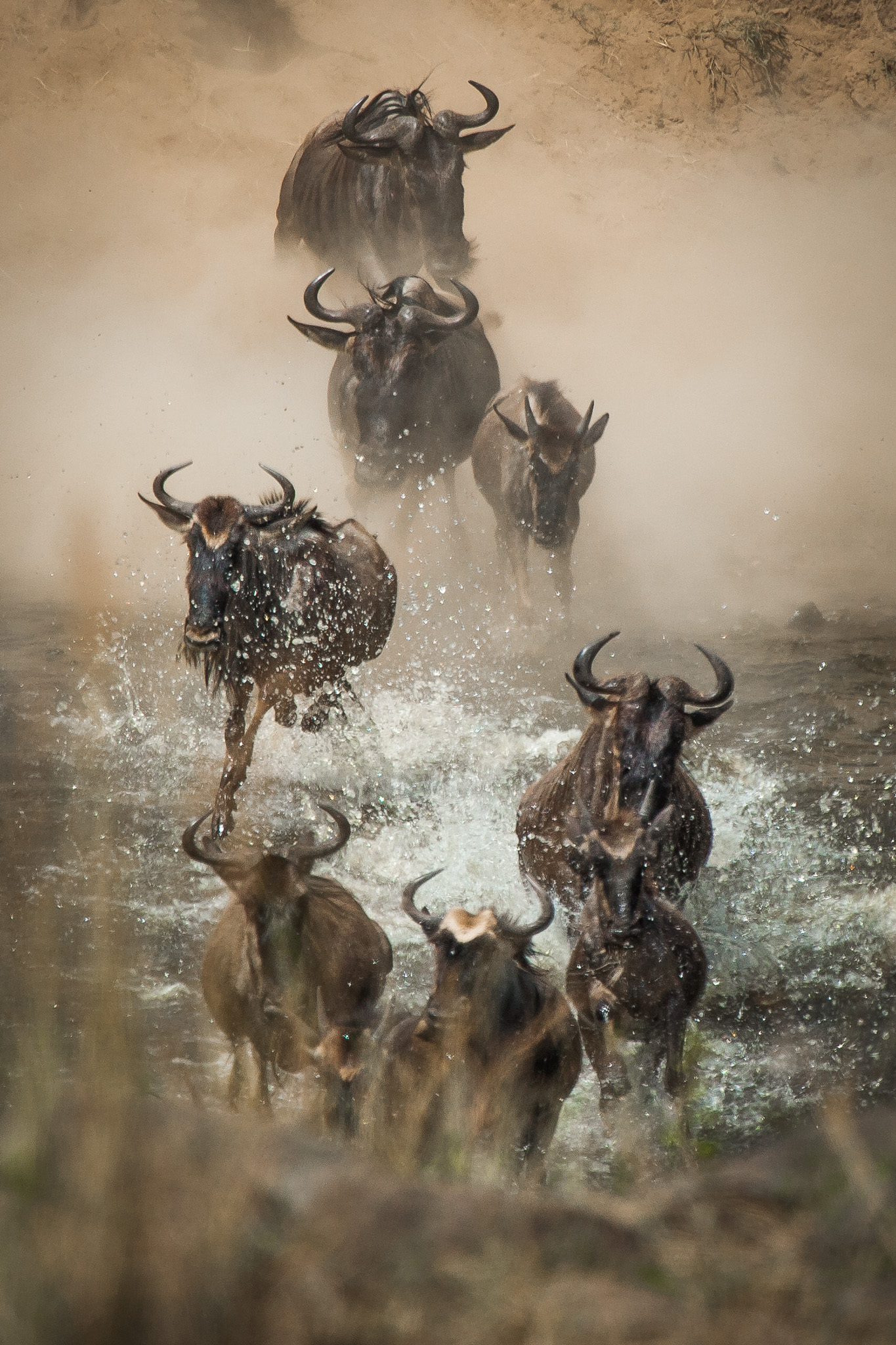
No discussion of the Serengeti is complete without addressing its most celebrated feature — the Great Wildebeest Migration, widely and justifiably regarded as the greatest wildlife spectacle on the surface of the earth. Every year, more than 1.5 million wildebeest, accompanied by approximately 200,000 zebras and 500,000 Thomson’s gazelles, undertake a continuous, circular journey across the Serengeti ecosystem in pursuit of fresh grass and water, following the rains in an ancient, instinct-driven rhythm that has been repeating itself for thousands of years.
The migration is a year-round phenomenon, not a single event, and the Serengeti hosts different chapters of its extraordinary story at different times of year. The calving season on the southern plains between January and March produces tens of thousands of newborn wildebeest calves in a concentrated explosion of new life that draws predators from across the ecosystem and creates predator-prey dynamics of almost cinematic intensity. The long rains movement through the central Serengeti between April and June carries the herds northward in a slow, unstoppable tide of hooves and dust. The Grumeti River crossings of June and July offer the first dramatic water crossings of the season, with enormous crocodiles lying in wait in the murky waters. And the famous Mara River crossings of August and September — the thundering, desperate, crocodile-fraught plunges that have made the Serengeti’s name synonymous with wildlife drama at its most raw and its most extraordinary — are the climax of the entire annual cycle, a spectacle of such overwhelming power and beauty that no photograph, no film, and no written account can adequately prepare the visitor for the reality of witnessing one.
Wildlife Beyond the Migration
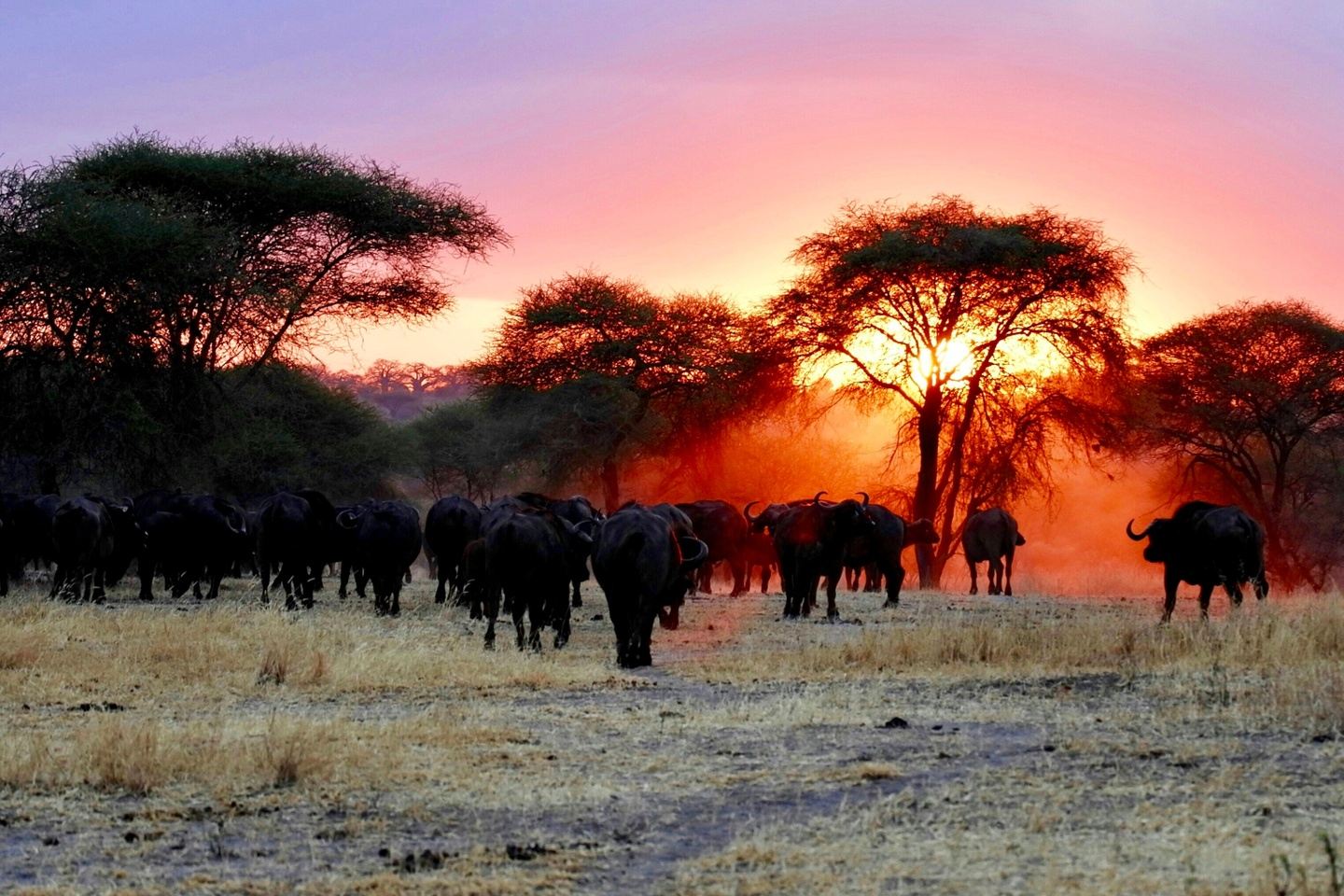
While the Great Migration dominates the Serengeti’s global reputation, the park’s wildlife offering extends far beyond the migrating herds to encompass one of the richest and most diverse assemblages of large mammals anywhere on earth. The Big Five — lion, leopard, elephant, buffalo, and rhinoceros — are all present in the park, and the Serengeti is one of the finest destinations in Africa for observing these iconic animals in the full, undisturbed context of their natural habitat.
Lions are particularly abundant and particularly accessible in the Serengeti, with an estimated population of approximately 3,000 individuals distributed across the park in prides whose territories and movement patterns are well known to experienced guides. The open grasslands of the central and southern Serengeti provide exceptional lion viewing conditions — large prides visible at distance, hunts observed across open terrain, and the extraordinary social dynamics of lion family life on full, unobstructed display. Leopards inhabit the riverine forests along the Seronera River in notable concentrations, and the central Serengeti’s combination of open grassland and forest habitat makes it one of the finest locations in East Africa for regular leopard sightings. Cheetahs are abundant on the open southern and central plains, where the flat terrain and short grass provide ideal hunting conditions and where multiple coalition males and family groups with cubs are regularly encountered in close proximity.
The Birding: A Paradise Above the Grass
The Serengeti’s reputation as a wildlife destination is overwhelmingly defined by its mammals, but the park is simultaneously one of the finest birdwatching destinations in East Africa, with more than 500 recorded species inhabiting its diverse range of habitats. The grasslands support large numbers of ostriches, secretary birds, kori bustards, and crowned cranes — large, visually striking species that are conspicuous and easily observed from a vehicle. The riverine forests and acacia woodlands harbour an extraordinary diversity of smaller species — sunbirds, weavers, kingfishers, bee-eaters, and the magnificent lilac-breasted roller, whose extraordinary turquoise, green, and lilac plumage makes it one of the most photographed birds in Africa. The skies above the Serengeti support large numbers of raptors — martial eagles, bateleurs, tawny eagles, and numerous vulture species that circle above kills with a patient, soaring elegance that is beautiful in its own right and deeply indicative of the ecosystem’s extraordinary productivity.
When to Visit the Serengeti
The Serengeti rewards visitors in every month of the year, but the timing of a visit significantly shapes the experience. July through October is the peak season for the Mara River crossings in the northern Serengeti and offers the best game viewing conditions of the year, with dry conditions, sparse vegetation, and wildlife concentrated around water sources. January and February offer the extraordinary spectacle of the calving season on the southern plains, with exceptional predator activity and the deeply moving sight of thousands of newborn wildebeest taking their first steps in the world. November through December and March through May offer a greener, lusher Serengeti at lower prices, with exceptional birding and good wildlife viewing throughout.
Getting There and Getting Around
The Serengeti is accessible by scheduled and charter flights from Arusha and Kilimanjaro International Airport to multiple airstrips within the park — Seronera, Grumeti, Kogatende, and others — making it possible to reach the heart of the park in approximately one hour from Arusha. Road access from Arusha takes approximately seven to eight hours and passes through the extraordinary landscape of the Ngorongoro Conservation Area, offering wildlife sightings en route that make the long drive feel like an integral part of the safari experience rather than a logistical inconvenience.
Final Thoughts: The Serengeti as a Life-Defining Experience
The Serengeti National Park is not simply the finest safari destination in Tanzania. It is, by the consistent testimony of wildlife experts, seasoned travellers, and ordinary people who have had the extraordinary good fortune to spend time within its borders, one of the most magnificent places on earth — a landscape of such wild, ancient, teeming beauty that it changes the people who experience it in ways they carry forward for the rest of their lives. To stand on the open plains of the Serengeti at dawn, watching the light change over an ocean of grass that stretches to every horizon, listening to lions call across the distance, and feeling the particular quality of aliveness that only the African wilderness can produce — this is an experience that belongs in every life, and that Tanzania offers with a generosity, a consistency, and a magnificence that is simply without equal anywhere on earth.
Other destinations in
TANZANIA
From great national parks to white sand beaches
Popular Trips in Tanzania
Take a look at some of our itineraries and unique experiences — every one of our holidays is designed around you.
Ultimate 3-Day Safari: Explore Serengeti & Ngorongoro
3 Days
Price from
$ $1,200 – $1,800
6 Days Tanzania safari adventure of a lifetime
6 Days
Price from
$ $1,895 - $3,200
Explore Northern Tanzania
9 Days
Price from
$ $2,100 – $5,500
Tanzania grand safari & Zanzibar ocean retreat
12 Days
Price from








%20copy%203.svg)