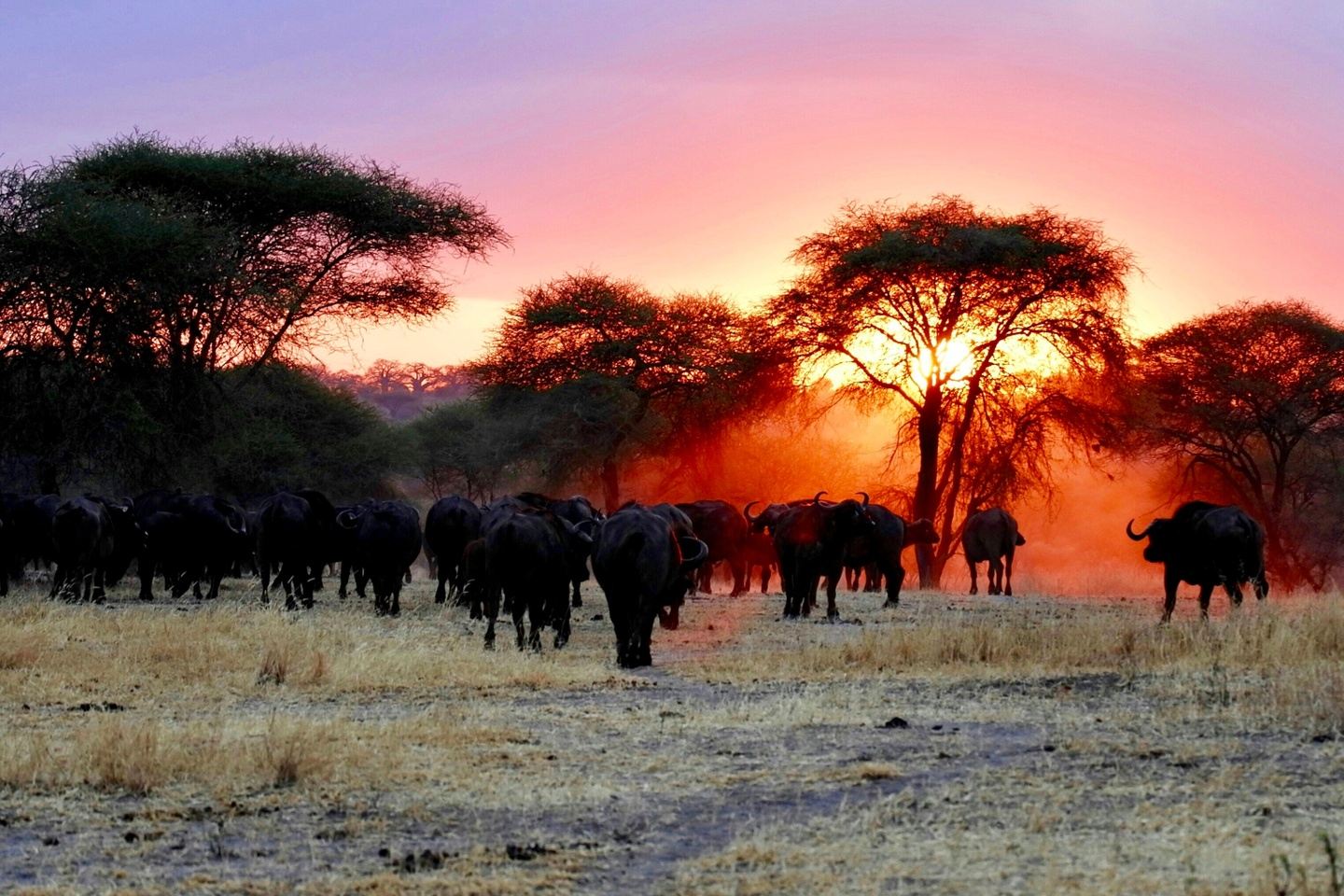
NGORONGORO CRATER
A World Within a World
There are natural formations on this earth so extraordinary, so complete in their beauty, and so astonishing in their ecological richness that they seem less like features of a landscape and more like deliberate creations — places so perfectly designed for the sustenance of life and the cultivation of wonder that they feel almost intentional in their magnificence. The Ngorongoro Crater is one of those places. Formed approximately two to three million years ago when a massive, ancient volcano — estimated to have been as tall as Kilimanjaro — collapsed inward on itself following a cataclysmic eruption, the Ngorongoro Crater is the world’s largest intact and unflooded volcanic caldera, a natural enclosure of such extraordinary ecological richness and such overwhelming physical beauty that it has been described, with complete justification, as the Eighth Wonder of the Natural World.
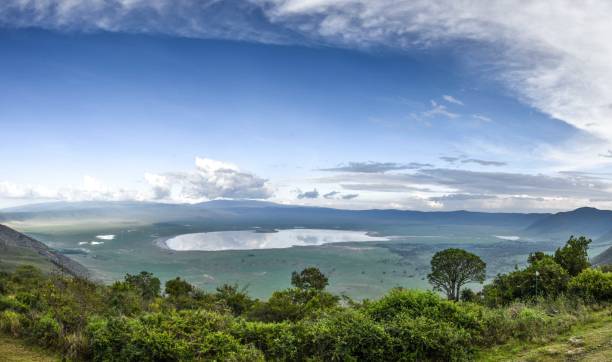
The crater floor sits at approximately 1,800 metres above sea level, enclosed by walls that rise steeply to a rim at approximately 2,300 metres — a difference of 500 metres that creates a sense of dramatic, enclosed grandeur as visitors descend into the caldera on the steep, winding access roads that are the only land entry points to the crater floor. The floor itself covers approximately 260 square kilometres of the most wildlife-dense and most ecologically diverse terrain in Africa — a complete, functioning ecosystem of remarkable complexity and remarkable beauty, enclosed within the ancient volcanic walls like a living jewel in an extraordinary natural setting.
The Ecological Miracle of the Crater Floor
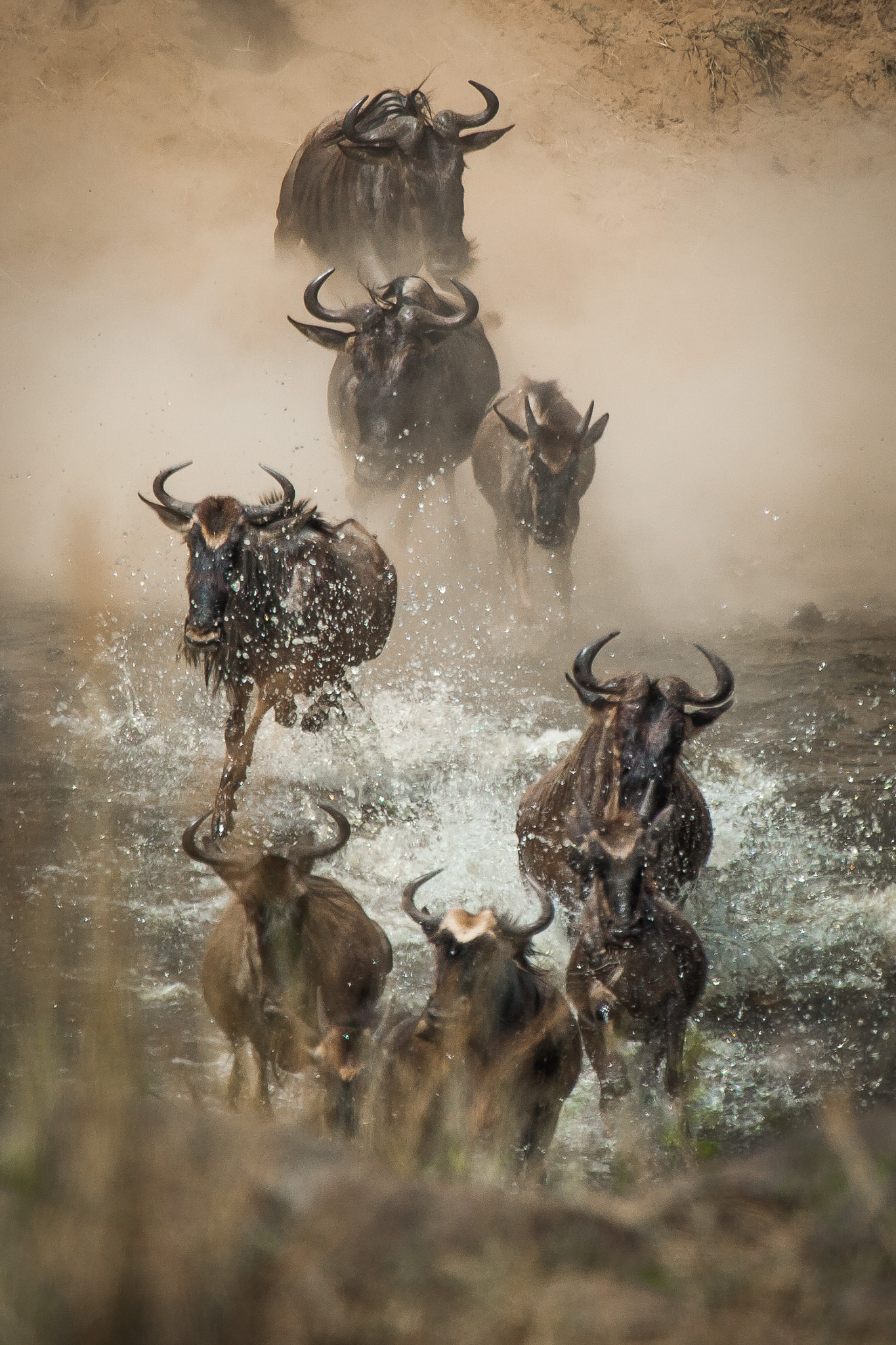
The Ngorongoro Crater floor supports a permanent population of approximately 25,000 large animals — a concentration of wildlife per square kilometre that rivals and in many respects surpasses even the Serengeti at the height of the migration. This extraordinary density of wildlife is sustained by the crater’s unique ecological character — the combination of permanent water sources, year-round grassland productivity, and the natural enclosure of the caldera walls that prevents the large-scale seasonal migration that characterises the open Serengeti ecosystem.
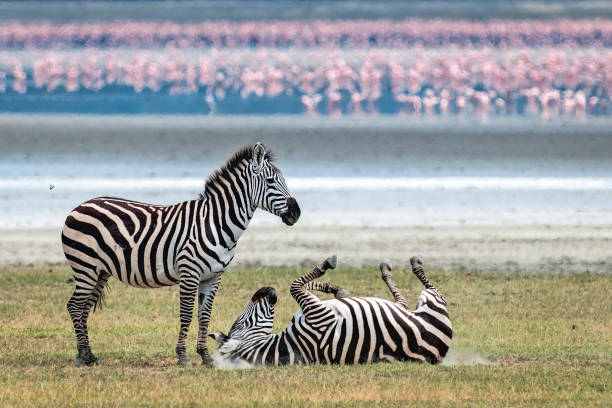
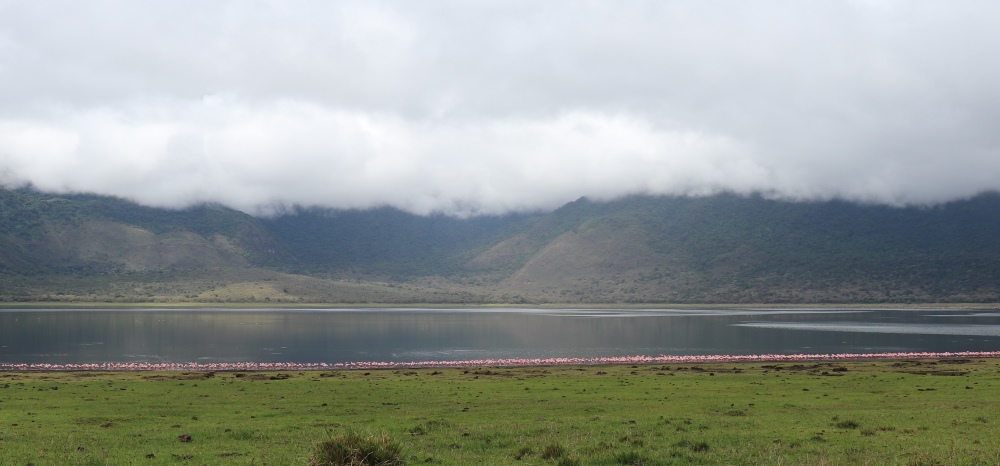
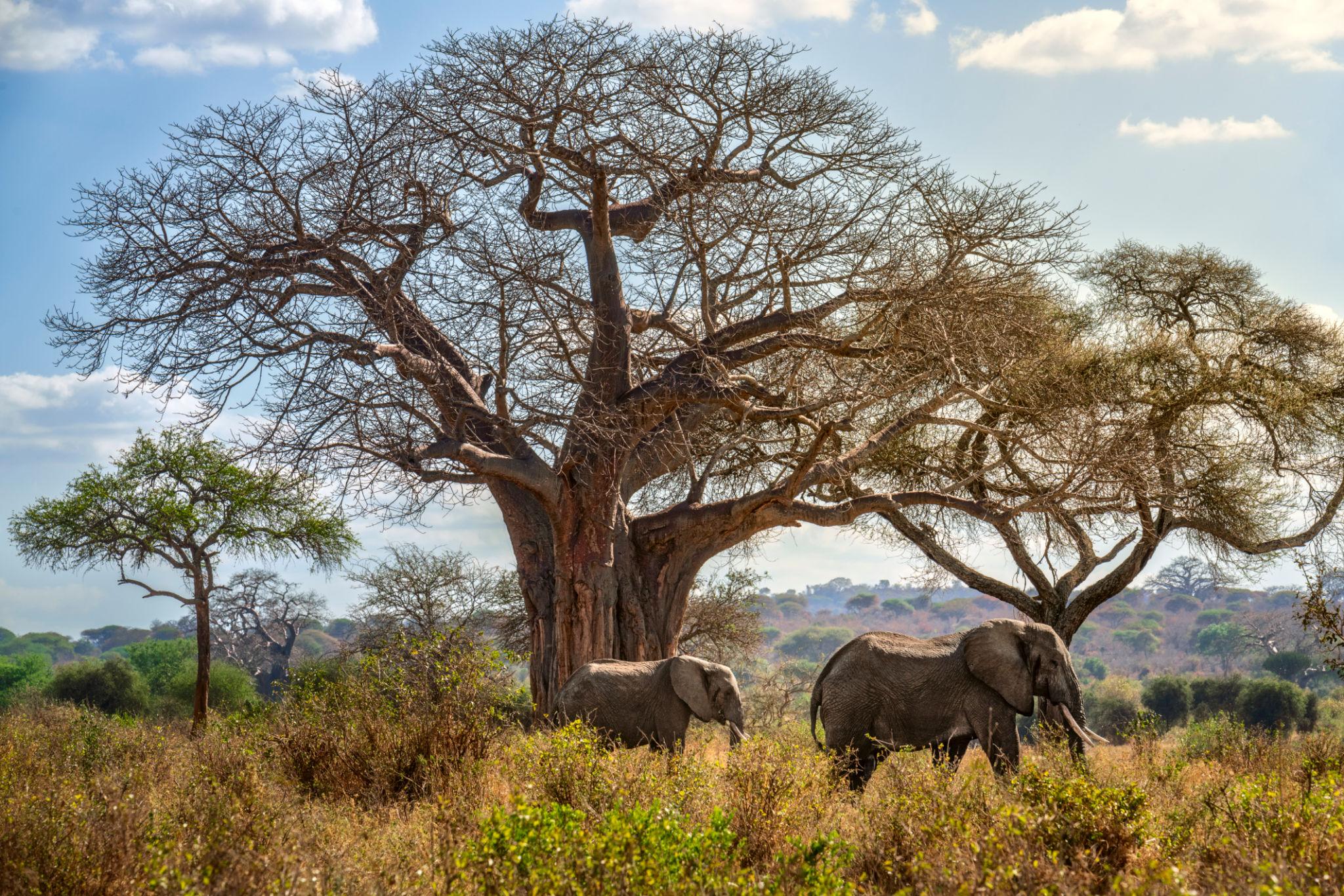
The crater floor encompasses several distinct habitat types that support different wildlife communities in close proximity. The short-grass plains of the central and eastern floor are the domain of wildebeest, zebra, gazelle, and the predators that follow them — lions, hyenas, jackals, and cheetahs hunting in an open terrain of exceptional visibility. The Lerai Forest — a beautiful grove of yellow-barked fever trees in the southwestern portion of the crater — provides habitat for elephants, baboons, and a remarkable diversity of forest birds, its dappled shade offering a welcome contrast to the open plains. Lake Magadi, a shallow soda lake in the western floor, turns pink with enormous flocks of lesser flamingos during the wetter months, creating one of the most visually extraordinary sights in all of Tanzania. The Hippo Pool near the Mandusi Swamp in the northern floor hosts a permanent population of hippos and supports some of the finest crocodile watching in East Africa, with large individuals basking in the shallows with a prehistoric calm that makes them look like survivors from another geological era — which, in every meaningful sense, they are.
The Big Five in the Crater
The Ngorongoro Crater is statistically the single most reliable location in Africa for encountering all five members of the Big Five — lion, leopard, elephant, buffalo, and rhinoceros — in the shortest possible time, and this distinction is one of the primary reasons why it attracts visitors from every corner of the world with a consistency that has made it one of the most visited natural attractions on the African continent. The crater’s enclosed geography means that its resident wildlife populations are stable, well-known to experienced guides, and encountered with a regularity and a predictability that the vast open spaces of the Serengeti, for all their magnificence, cannot always match.
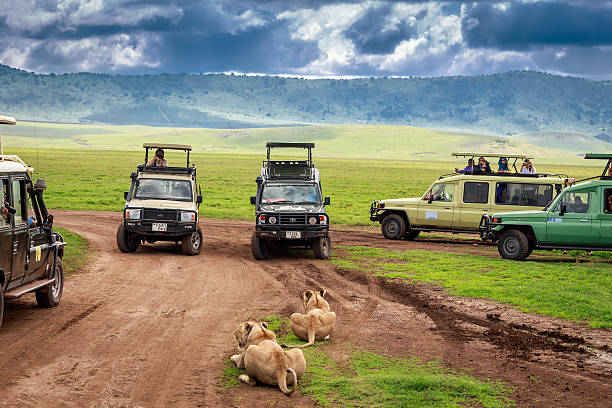
Lions are the most conspicuous and most frequently encountered predator in the crater, with several resident prides whose territories cover different sections of the floor and whose members are individually known to the guides who work the crater daily. The crater’s lions are famous for their thick, dark manes — a characteristic believed to result from the cooler temperatures of the high-altitude caldera — and for the remarkable accessibility with which they allow vehicles to approach them, a habituation developed over decades of non-threatening human presence that makes lion encounters in the Ngorongoro Crater among the most intimate and most photographically rewarding anywhere in Africa.
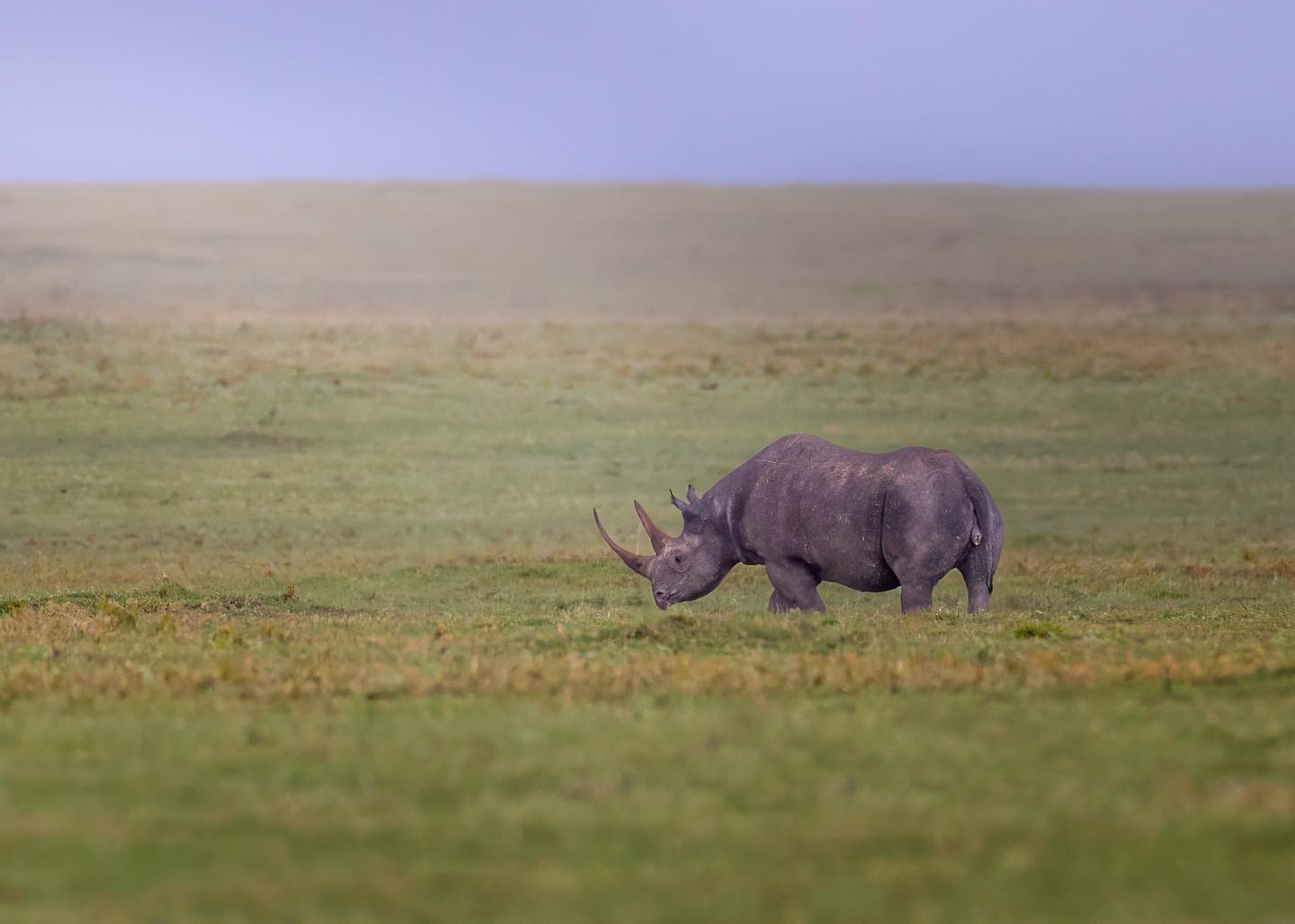
The black rhinoceros of the Ngorongoro Crater — approximately 26 to 30 individuals protected within the caldera under intensive conservation management — represent one of the most precious and most emotionally significant wildlife encounters available in Tanzania. These ancient, armoured, magnificently prehistoric creatures are among the rarest large mammals on earth, their numbers devastated by decades of catastrophic poaching, and each sighting in the crater carries a weight of reverence and gratitude that is unlike any other wildlife encounter. Seeing a black rhino moving through the crater floor — even at considerable distance, a grey shadow in the golden grass — is an experience that reduces experienced safari veterans to silence and first-time visitors to tears.
The Maasai and the Crater: Coexistence and Culture
The Ngorongoro Conservation Area — the broader protected area within which the crater sits, covering approximately 8,292 square kilometres — is unique among Tanzania’s protected areas in that it is a multiple land use area rather than a pure national park, meaning that the indigenous Maasai people continue to live and graze their cattle within its boundaries in a coexistence with wildlife that has characterised this landscape for centuries. The Maasai of the Ngorongoro Conservation Area are the living embodiment of a relationship between human communities and wild nature that the modern world has largely lost elsewhere, and their presence within the conservation area adds a cultural depth and a human richness to the Ngorongoro experience that transforms it from a pure wildlife spectacle into something more complex, more honest, and ultimately more profound.
A visit to a Maasai boma — the traditional circular homestead of a Maasai family, surrounded by a thorn-bush fence and centred on a compound of low, ochre-coloured mud and dung houses — is one of the most genuinely enriching cultural experiences available to any visitor to northern Tanzania. The extraordinary beadwork jewellery worn by Maasai women, the ochre-painted faces and elaborate headdresses of the warriors, the traditional adamu jumping dance performed with an athleticism and a pride that speaks of a culture entirely at ease with its own beauty — these are not performances staged for tourist consumption but genuine expressions of a living cultural tradition of remarkable depth and remarkable dignity.
When to Visit the Ngorongoro Crater
The Ngorongoro Crater is one of the few locations in Tanzania that offers truly outstanding wildlife viewing in every month of the year, with the crater’s permanent water and year-round grass productivity ensuring that the wildlife is consistently present and consistently accessible regardless of season. However, certain months offer particular highlights — January through March brings excellent predator activity as the calving season draws large numbers of lions and hyenas to the short-grass plains, while June through October offers the clearest skies and the most reliable visibility for photography. The crater can be misty and cloud-covered in the mornings during the wet season, but the dramatic atmosphere that low cloud and morning mist lend to the extraordinary landscape is itself a photographic opportunity of considerable beauty.
The Crater Rim: A World Above
The Ngorongoro Crater rim is itself one of the most beautiful and most dramatic viewpoints in all of Africa — a ridge of extraordinary panoramic views over the caldera below, the Serengeti plains stretching away to the west, and the extraordinary highland landscape of the conservation area surrounding it in every direction. The crater rim lodges — several of which are among Tanzania’s finest and most celebrated safari properties — sit on the rim at approximately 2,300 metres, offering views from their dining rooms, terraces, and rooms that are among the most dramatic and most beautiful of any lodge in East Africa. Waking in a crater rim lodge as the sun rises over the eastern escarpment and fills the caldera below with the first golden light of morning, watching the mist slowly clear from the crater floor to reveal the wildlife beginning its day far below — this is one of the most quietly extraordinary experiences that Tanzania safari accommodation has to offer.
Ngorongoro as Africa’s Most Perfect Place
The Ngorongoro Crater is, in the most complete and most literal sense, one of the most perfect places on earth — a natural enclosure of such extraordinary beauty, such ecological richness, and such profound, overwhelming grandeur that every visit leaves its visitors with a sense of having been admitted, briefly and gratefully, to something deeply sacred and deeply irreplaceable. It is a place that demands to be experienced slowly, to be absorbed completely, and to be carried forward with the reverence and the gratitude that the extraordinary privilege of its beauty deserves. Tanzania without the Ngorongoro Crater would still be one of the world’s great safari destinations. With it, Tanzania becomes something closer to paradise.
Other destinations in
TANZANIA
From great national parks to white sand beaches

Popular Trips in Tanzania
Take a look at some of our itineraries and unique experiences — every one of our holidays is designed around you.
Ultimate 3-Day Safari: Explore Serengeti & Ngorongoro
3 Days
Price from
$ $1,200 – $1,800
6 Days Tanzania safari adventure of a lifetime
6 Days
Price from
$ $1,895 - $3,200
Explore Northern Tanzania
9 Days
Price from
$ $2,100 – $5,500
Tanzania grand safari & Zanzibar ocean retreat
12 Days
Price from








%20copy%203.svg)