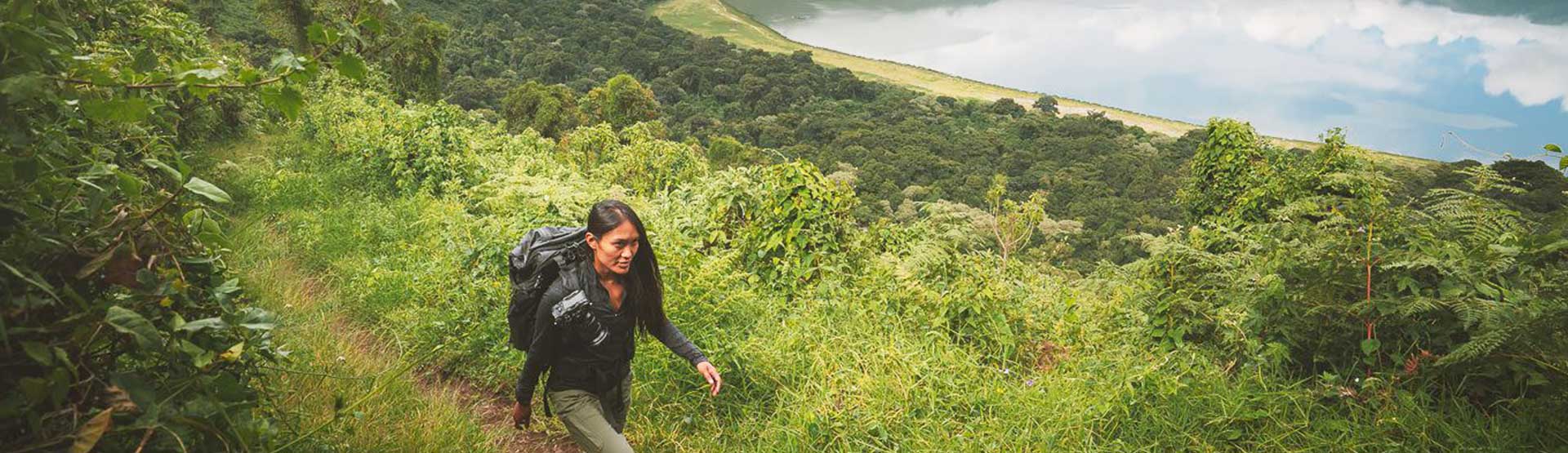
An Empakai Crater hike takes you to one of Tanzania’s quietest and most beautiful hidden places. Far from the busy safari circuit, a green volcanic caldera holds a shining lake, a small forest and wildlife that has barely met a crowd. From the rim, you can see the perfect cone of Ol Doinyo Lengai, the “Mountain of God”, and on a clear day the far peak of Kilimanjaro. Grand World Tours operates in Tanzania, Kenya and Zanzibar, and this guide explains where the crater is, how to get there, the best time to go, what to expect and 10 amazing things to know before you go.
In this guide
What Is an Empakai Crater Hike?
Empakai is a collapsed volcanic cone, called a caldera, in the highlands of northern Tanzania. Its floor is covered by a soda lake and patches of forest and grassland, and its steep walls are green with vegetation. An Empakai Crater hike means walking down from the rim to the lakeshore and back, with a ranger, through a landscape few visitors ever see.
Because it lies off the main safari road, the crater feels wild and peaceful. An Empakai Crater hike suits couples, families with active children, photographers and anyone who wants a day on foot between game drives.
Where Is Empakai Crater and How to Get There
Empakai Crater is inside the Ngorongoro Conservation Area, north of the famous Ngorongoro Crater and not far from Ol Doinyo Lengai and Lake Natron. It is in Tanzania only, and most visitors reach it as part of a longer northern circuit.
•
•
•
Access, fees and road conditions change, so we confirm everything for your dates before we plan your itinerary.
Best Time for an Empakai Crater Hike
•
•
•
Go in the morning. The air is clear, the crater is still, and the light on the lake is at its best. Mist can cover the rim early, but it often lifts as the day warms up.
What to Expect on Your Empakai Crater Hike
1.
2.
3.
4.
5.
6.
7.
Top 10 Things to Know About an Empakai Crater Hike
1.
2.
3.
4.
5.
6.
7.
8.
9.
10.
Combine Your Empakai Crater Hike With Kenya
Empakai Crater is in Tanzania, but it fits well into a journey that continues into Kenya. This is how we often build the trip:
•
•
•
•
Why Pick Grand World Tours for Your Empakai Crater Hike?
Grand World Tours is a Tanzania-based company operating in Tanzania, Kenya and Zanzibar, with trusted partners in Uganda, Namibia and South Africa. Our founder began as a professional safari guide, so we plan every Empakai Crater hike around real experience of the roads, the weather and the walk.
•
•
•
•
•
For official information, visit the Ngorongoro Conservation Area Authority and The Ngorongoro Conservation Area is also a UNESCO World Heritage Site.
Frequently Asked Questions About an Empakai Crater Hike
What is Empakai Crater?+
Empakai is a volcanic caldera in the Ngorongoro Conservation Area of northern Tanzania, with a lake and forest on its floor and views of Ol Doinyo Lengai from the rim.
How long does an Empakai Crater hike take?+
Plan a half day to a full day, including the drive, the walk down, time at the lake and the climb back. The ascent takes longer than the descent.
Is the Empakai Crater hike difficult?+
It is a moderate hike. The path is steep and the altitude is high, but you can go at your own pace and rest as often as you like.
Do we need a guide or ranger?+
Yes. The walk is made with a ranger from the conservation area, and we also travel with our own guide. This keeps the hike safe because wildlife lives in the crater.
What is the best time for an Empakai Crater hike?+
June to October and January to February are usually the best, with drier tracks and clearer views. The green season can make roads muddy.
Will we see flamingos?+
Sometimes. Flamingo numbers change with the water and the season, so we cannot promise them, but the lake and the birdlife are lovely in any case.
Can children do the Empakai Crater hike?+
Active children who enjoy walking usually manage well. Please tell us their ages and we will check the rules and the pace with you.
Can we combine Empakai Crater with Kenya?+
Yes. Many guests start in Tanzania, hike Empakai Crater and then continue to the Maasai Mara or Amboseli, with Zanzibar at the end if they wish.
Plan Your Empakai Crater Hike
Ready to start your Empakai Crater hike? Tell us your dates, your fitness level and who is travelling, and we will build a journey from the crater rim to the savannah and beyond.