The Rongai Route
Rongai Route Kilimanjaro: The Quiet Northern Path to Uhuru Peak
Most trekkers approach Kilimanjaro from the south. A few choose to arrive from the north instead, on a trail that feels like a different mountain altogether. The Rongai Route Kilimanjaro climb is the only route that begins near the Kenyan border, offering wide open views, a gentle gradient and some of the quietest trails on the mountain.
It is a route for those who value peace, steady progress and a drier climb. It may not be the best-known path to Uhuru Peak, but for the right trekker it is one of the most rewarding.
Rongai Route Kilimanjaro at a Glance
- Character: Quiet, gradual and remote
- Duration: 6 or 7 days (7 days recommended)
- Starting point: Rongai Gate, northern Kilimanjaro, approximately 1,950 m
- Summit: Uhuru Peak, 5,895 m
- Descent: Marangu Route
- Accommodation: Mountain camping
- Difficulty: Moderate, with a demanding summit night
- Best months: January to mid-March, June to October, and a good option in the wetter months
Full day-by-day details are in our Kilimanjaro itinerary section above.
A Route of Open Skies and Quiet Trails
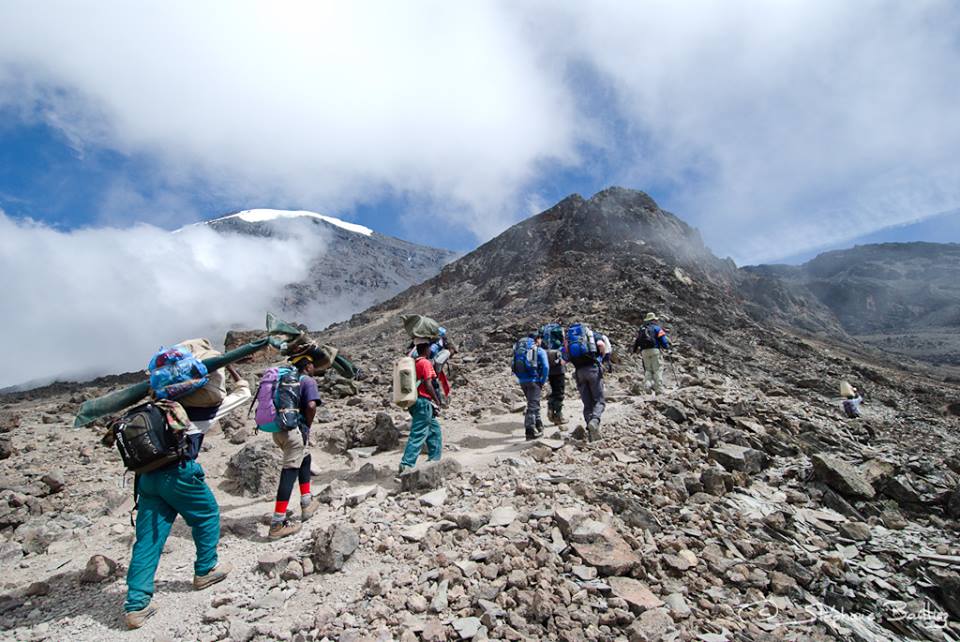
The Rongai Route Kilimanjaro trail begins on the mountain’s northern slopes, passing through farmland and pine plantations before entering montane forest. Here, colobus monkeys often watch from the trees, and the paths are wide, soft and unhurried.
As you climb, the forest gives way to open moorland and, later, the stark beauty of the alpine desert. The views are quite different from the southern routes. To the north, the plains of Kenya stretch away to the horizon, while ahead the jagged spires of Mawenzi rise beside the great cone of Kibo. Because the route is quieter, you may walk for hours with only your team and the mountain for company.
The final ascent begins in the cold, silent hours before dawn from Kibo Hut, climbing to the crater rim and on to Uhuru Peak at first light.
Why the Rongai Route Kilimanjaro Trail Is Different
Rongai stands apart from other routes for several reasons:
- A gentler gradient. The ascent is steady and gradual, with fewer steep sections than routes such as Umbwe.
- A drier climb. The northern side lies in the mountain’s rain shadow and receives less rainfall, making Rongai a sensible choice in wetter months.
- Fewer crowds. Traffic is much lighter than on Machame, so camps and trails feel peaceful.
- A different perspective. You see Kilimanjaro and Mawenzi from the north, a view most trekkers never experience.
Rongai Route Kilimanjaro Difficulty: An Honest Word
We believe you should know exactly what you are choosing.
The Rongai Route Kilimanjaro trek is often described as easier than the southern routes, and its gentle gradient is real. But it is still a high-altitude climb to nearly 6,000 metres, and summit night is cold, dark and demanding for everyone.
Three points are worth knowing before you decide:
- The ascent is faster than it feels. The gradient is gentle, but on the shorter 6-day version your body has less time to adapt. We recommend the 7-day itinerary, which adds an extra acclimatisation night at Mawenzi Tarn.
- The scenery is less varied. The northern side lacks the dramatic Barranco Wall and the sweeping Shira Plateau found on Lemosho. Its charm lies in quiet and space, rather than spectacle.
- The start is remote. The trailhead is close to the Kenyan border, so the journey to the gate is longer.
Who Is the Rongai Route Kilimanjaro For?
The Rongai Route Kilimanjaro trail suits trekkers who:
- prefer quiet trails and a sense of solitude
- want a gradual climb without steep scrambles
- plan to climb during the wetter months and want the driest possible route
- have good general fitness and have trained with regular hill walking
If you want the most dramatic scenery and the highest success rate, we may suggest Lemosho instead. Guiding you honestly is part of how we work.
How to Prepare for the Rongai Route Kilimanjaro Climb
Good preparation is the difference between a difficult climb and an unforgettable one. In the months before you travel, we recommend:
- Regular hill walking or hiking with a loaded daypack, building up to several hours at a time
- Cardio training such as running, cycling or stair climbing, three to four times a week
- Leg strength work, including lunges and squats
- Breaking in your boots well before departure to prevent blisters
- A medical check-up with your doctor, especially if you have a health condition
Most importantly, learn to walk slowly. On Kilimanjaro, the Swahili phrase pole pole, meaning “slowly, slowly”, is the best advice you will receive.
What to Pack for Kilimanjaro
Temperatures range from warm farmland to well below freezing on summit night, so layers are essential. Your packing list should include:
- Waterproof jacket and trousers
- Warm insulated jacket, thermal base layers and a fleece
- Sturdy, broken-in hiking boots and several pairs of wool socks
- Warm hat, gloves or mittens, and a buff or scarf
- A four-season sleeping bag suitable for freezing temperatures
- A headlamp with spare batteries, trekking poles and sunglasses
- Sunscreen, lip balm and a reusable water bottle or hydration system
We provide a full packing list after booking, and can arrange rental equipment for items you prefer not to buy.
Rongai Route Kilimanjaro: Weather and What to Expect
Weather on Kilimanjaro changes quickly. Expect warm days on the lower slopes, cool mornings on the moorland and freezing nights above 4,000 metres. Although the north is drier, mist and rain can still arrive at any time, so a waterproof layer should always be within reach.
Each day follows a similar rhythm: an early breakfast, a steady walk, a hot lunch, and an afternoon of rest at camp before dinner and a briefing with your guide. Days are unhurried by design, and that calm pace is part of what makes the Rongai Route Kilimanjaro experience so special.
The Grand World Tours Difference
Grand World Tours is a Tanzanian company led by people who know Kilimanjaro from the inside. Success on this mountain depends on pace, hydration and early recognition of altitude symptoms, and that is exactly where experienced guides make the difference.
Your climb includes:
- Experienced mountain guides who read the weather and your condition every step of the way
- A dedicated crew of assistant guides, cooks and porters
- Quality tents, mattresses and a private mess tent
- Fresh, nutritious meals prepared on the mountain
- Daily health checks, including pulse and oxygen monitoring
- A carefully paced plan, with the 7-day option recommended for the best chance of success
Everything is organised for you, so your energy goes entirely into the climb.
Best Time to Climb the Rongai Route Kilimanjaro Trail
The best conditions are during the dry seasons: January to mid-March and June to October. Trails are firmer, skies are clearer and summit views are at their best. Because the northern side is drier, Rongai is also a reasonable choice during the rains of March to May and November, when other routes become muddy and slippery. Even so, expect cooler, wetter conditions higher up. For park details, see the official Tanzania National Parks website.
Rongai Route Kilimanjaro FAQs
How many days do I need for the Rongai Route Kilimanjaro?
Six days is the minimum, but seven is recommended. The extra night helps your body adapt and improves your chance of reaching the summit.
Is Rongai easier than other Kilimanjaro routes?
Its gradient is gentler than most, but the summit night is the same on every route. Rongai feels easier day to day, but altitude still decides success.
Is the Rongai Route Kilimanjaro suitable for beginners?
Yes, for fit and well-prepared first-time trekkers, especially with the 7-day itinerary. It requires no mountaineering experience.
Can I climb Rongai in the rainy season?
It is the most sensible route for the wetter months because the northern slopes are drier. Conditions higher up can still be cold and wet.
Is it safe?
Yes, with experienced guides, correct pacing and daily health monitoring. Altitude is the main risk, and our team is trained to manage it.
Do I need a guide?
Yes. Park regulations require every climber to be accompanied by a licensed guide.
Is Rongai Your Mountain?
The Rongai Route Kilimanjaro climb is not the most famous way up the mountain. It may be one of the most peaceful. If you want quiet trails, open horizons and a steady path to the roof of Africa, we would be honoured to guide you.
Kilimanjaro Trips
Kilimanjaro Mountain Top Route
Lemosho Route
Among all the routes that ascend the magnificent slopes of Mount Kilimanjaro, the Lemosho Route occupies a position...
Machame Route
If the Lemosho Route is the connoisseur’s choice — the route selected by those who...
Mweka Route
The Mweka Route is occasionally used as an ascent route primarily as part of the...