The Great Migration: Nature’s Most Spectacular Wildlife Event
What Is the Great Migration?
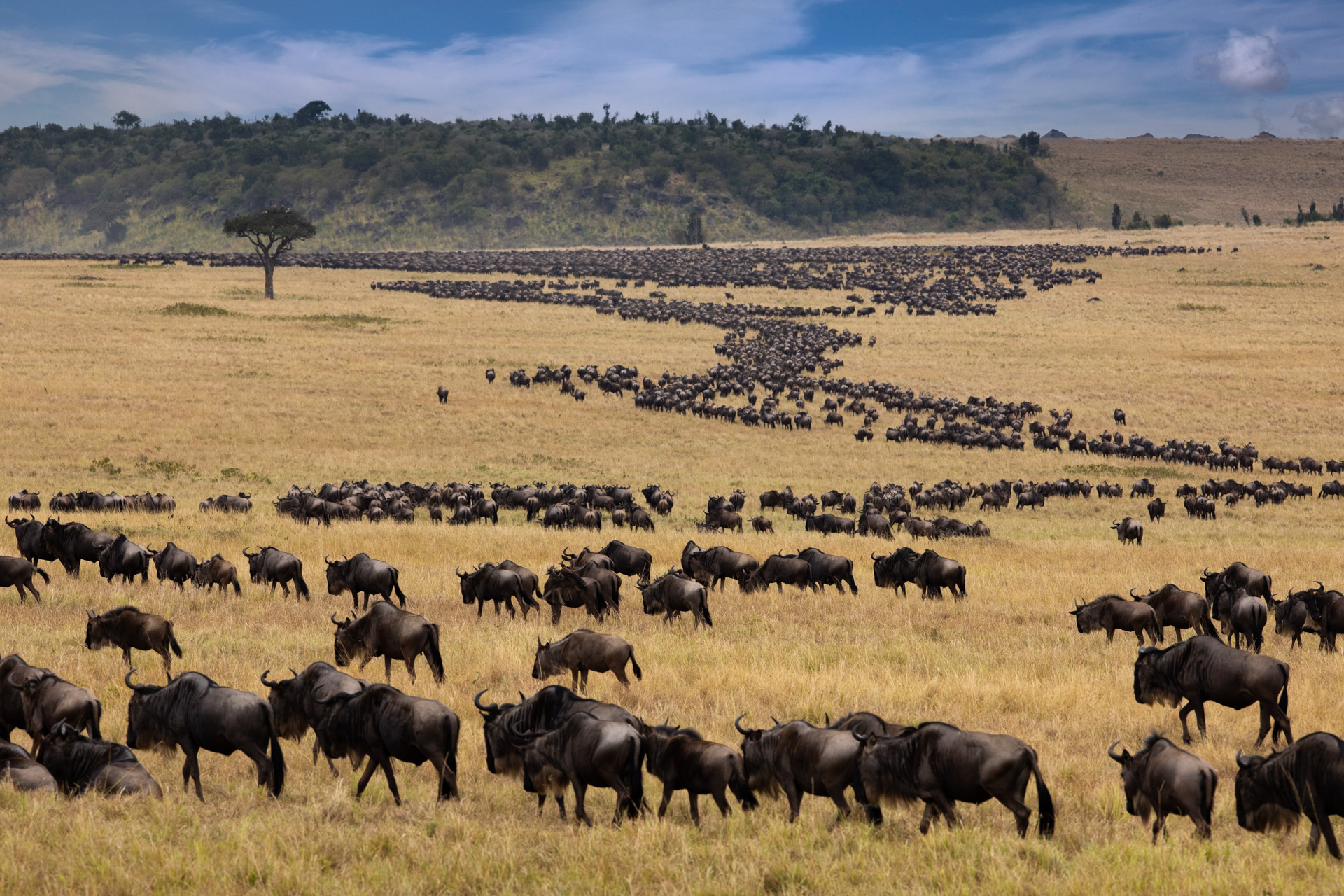
There are natural events that remind us, forcefully and humbling, just how small we are in the grand story of life on earth. The Great Migration is one of them. Widely regarded as the greatest wildlife spectacle on the planet, the Great Migration is the annual movement of more than 1.5 million wildebeest, accompanied by hundreds of thousands of zebras, gazelles, and elands, across the vast ecosystems of Tanzania’s Serengeti National Park and Kenya’s Masai Mara Game Reserve. It is a journey driven entirely by instinct, by hunger, and by the relentless search for fresh grass and water — a circular, never-ending odyssey that has been repeating itself for millions of years.
No single moment marks the beginning or the end of the Great Migration. It is a continuous cycle, a living river of animals that flows across one of Africa’s last great wildernesses in a perpetual loop dictated by rainfall, grass growth, and the ancient rhythms of the African savanna. To witness any part of this extraordinary phenomenon — whether the thundering river crossings of the northern Serengeti or the tender chaos of the calving season on the southern plains — is to experience something that touches the deepest part of what it means to be alive and present on this earth.
The Route: Following the Herds Across the Serengeti Ecosystem
Understanding the Great Migration begins with understanding the route the herds follow throughout the year. The migration is not a straight line from point A to point B — it is a vast, roughly clockwise loop across the Serengeti-Mara ecosystem, covering approximately 1,800 kilometres in total. The animals follow the rains, moving constantly toward areas of fresh green grass, driven by an instinct so ancient and so precise that it defies simple explanation.
The journey begins on the short-grass plains of the southern Serengeti and the Ndutu area near the Ngorongoro Conservation Area, where the herds congregate between December and March to take advantage of the nutritious grasses that spring up after the short rains. As the dry season approaches and the southern plains begin to dry out, the herds begin their long march northward. By April and May, they move through the central Serengeti, through the Seronera Valley and the woodlands of the western corridor, grazing as they go and building strength for the challenges ahead.
By June and July, the leading herds have reached the western corridor of the Serengeti and the Grumeti River, where the first major river crossings of the season take place. Enormous Nile crocodiles lurk in the Grumeti’s murky waters, and the crossings here, while smaller in scale than those further north, are dramatic and intensely witnessed by safari visitors. From the Grumeti, the herds push northward through July and August, arriving at the northern Serengeti and the banks of the iconic Mara River — the stage for the most celebrated and dramatic chapter of the entire migration.
The Mara River Crossings: Nature’s Most Dramatic Moment
If there is a single image that defines the Great Migration in the popular imagination, it is the Mara River crossing. Every year between July and October, the wildebeest herds gather in enormous, agitated groups on the banks of the Mara River, working themselves into a state of collective nervous energy before the inevitable plunge into the crocodile-filled waters below. What happens next is one of the most breathtaking, terrifying, and emotionally overwhelming sights in the natural world.
The decision to cross is never made easily. Wildebeest are simultaneously drawn forward by the sight and smell of fresh grass on the opposite bank and paralysed by fear of the river and its predators. Herds of thousands can stand at the bank for hours, surging forward and then retreating in waves of collective indecision, until finally one animal — often a young, bold individual — makes the leap, and the rest follow in a thundering, unstoppable torrent. The noise is extraordinary. The dust, the splashing, the desperate bellowing of thousands of animals fighting the current — it assaults every sense simultaneously and leaves observers utterly speechless.
The Nile crocodiles of the Mara River are among the largest in Africa, some measuring over five metres in length, and they have been feeding on this annual bounty for their entire lives. They strike with terrifying speed and power, pulling wildebeest beneath the surface with barely a ripple. Yet the sheer volume of animals crossing means that the vast majority make it safely to the other side, scrambling up the opposite bank and immediately beginning to graze on the lush northern grasses. Death is ever-present during the crossings, but so is an overwhelming, surging vitality — a raw affirmation of life’s relentless persistence in the face of every conceivable obstacle.
It is worth noting that the Mara River crossings do not happen on a predictable schedule. The herds may cross multiple times a day, or they may stand at the bank for several days before committing. Spending at least three to four nights in the northern Serengeti during the July-to-October window gives you the best chance of witnessing a crossing, and experienced guides who know the terrain and the herds’ patterns are invaluable in positioning you at the right crossing point at the right moment.
The Calving Season: Where the Migration Begins
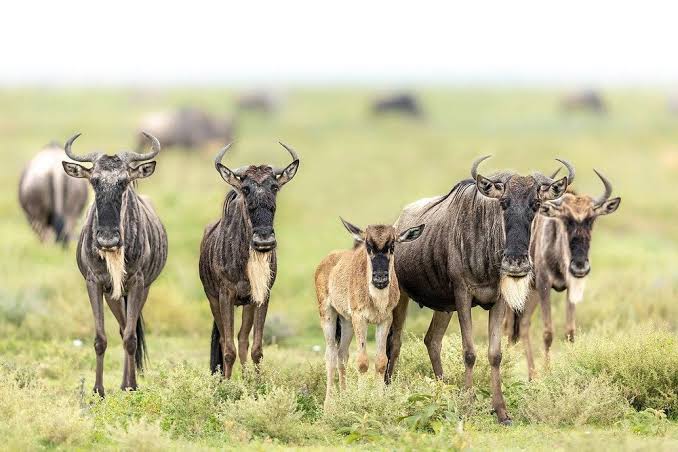
While the Mara River crossings receive the most attention, many seasoned safari travellers argue that the calving season on the southern Serengeti is the most emotionally powerful part of the entire Great Migration cycle. Between late January and early March, approximately 500,000 wildebeest calves are born on the short-grass plains of the Ndutu area and the southern Serengeti — a concentrated explosion of new life that is extraordinary in its scale and its intensity.
The calving is timed by evolution with extraordinary precision. The southern plains receive their rains between December and March, producing a flush of nutritious short grass that provides lactating wildebeest mothers with the energy they need to feed their newborns. The calves themselves are born with a remarkable degree of physical capability — within minutes of birth, a wildebeest calf attempts to stand, and within hours it can run well enough to keep pace with the herd. This rapid development is not accidental. It is a survival strategy shaped by millions of years of predator pressure.
Because the calving happens so rapidly and in such enormous numbers, predators are temporarily overwhelmed by the sheer abundance of vulnerable prey. Lions, cheetahs, leopards, spotted hyenas, wild dogs, jackals, and even martial eagles descend on the calving grounds in remarkable concentrations. The predator-prey interactions during this season are among the most dramatic and accessible anywhere in Africa — hunts unfold in open grassland in full daylight, and the density of both prey and predators means that action is almost constant from dawn to dusk. For wildlife photographers, the calving season on the southern Serengeti is quite simply one of the finest opportunities on earth.
The Supporting Cast: Zebras, Gazelles, and the Ecosystem Web
The Great Migration is most commonly associated with wildebeest, and understandably so — their sheer numbers and dramatic river crossings dominate the popular narrative. But the migration is far more than a wildebeest story. Approximately 200,000 plains zebras and 500,000 Thomson’s gazelles make the same journey, and their roles in the ecosystem are fascinating and deeply interconnected.
Zebras typically lead the migration, moving ahead of the wildebeest herds and feeding on the long, coarse grasses that the wildebeest prefer not to eat. In doing so, they effectively prepare the grazing for the wildebeest that follow, cropping the tall grass and exposing the shorter, more nutritious growth beneath. Thomson’s gazelles, by contrast, follow behind the wildebeest and feed on the very shortest, most tender grass that is exposed after the larger herds have moved through. This layered grazing system is a masterpiece of ecological efficiency, with each species occupying a slightly different niche and collectively ensuring that the grasslands are used to their maximum potential without being permanently degraded.
The migration also supports an extraordinary web of predators, scavengers, and secondary consumers. Lions, leopards, cheetahs, and wild dogs follow the herds throughout the year. Spotted hyenas, African vultures, marabou storks, and jackals clean up what the predators leave behind. Even the dung of the migrating herds plays a vital ecological role, fertilising the soil and supporting the insect life that sustains countless bird species. The Great Migration is not merely a spectacle — it is the beating heart of one of the most complex and productive ecosystems on the African continent.
Best Places to Witness the Great Migration
Knowing where to position yourself to witness the Great Migration is as important as knowing when to go. The Serengeti is vast, and the herds are spread across different areas at different times of year. The southern Serengeti and Ndutu area around the Ngorongoro border is the place to be between January and March for the calving season, with the Ndutu woodland providing a beautiful, tree-studded backdrop to the drama on the plains.
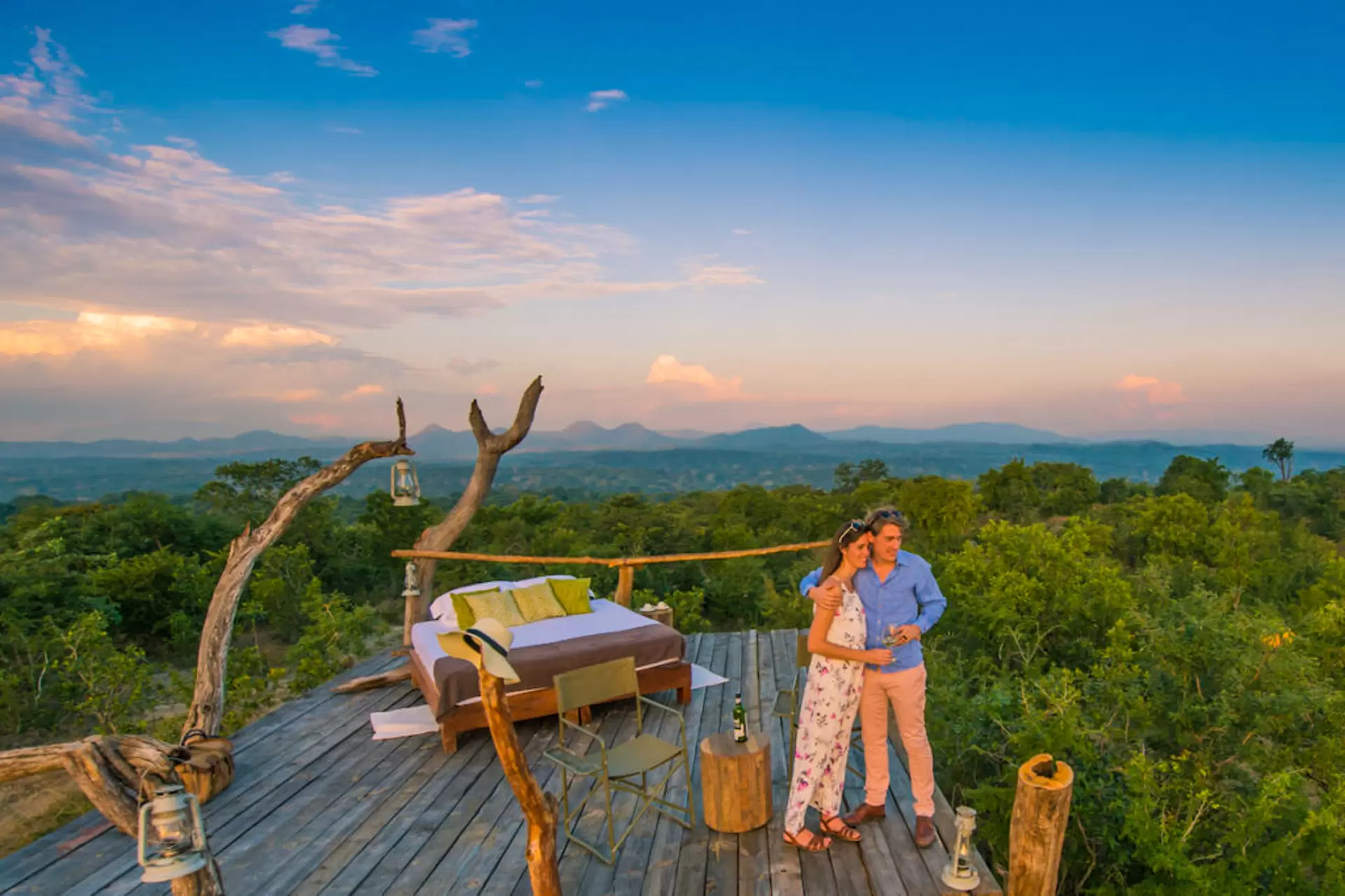
The central Serengeti, around Seronera, is a year-round wildlife hub and sees migrating herds pass through between April and June. The western corridor along the Grumeti River is the destination from June to July for the first river crossings of the season. The northern Serengeti, specifically the Lamai and Kogatende areas close to the Mara River, is where the famous crossings occur between July and October, and where demand for camp beds is highest and most competitive. Booking northern Serengeti accommodation at least twelve months in advance for the peak July-to-September period is strongly advisable.
Conservation and the Future of the Great Migration
The Great Migration has survived and thrived for millions of years, but it faces growing pressures in the modern world. Habitat loss along the migration corridors, particularly on the Kenyan side of the ecosystem where agricultural expansion has fragmented traditional movement routes, poses a serious long-term threat. Climate change is altering rainfall patterns across East Africa, potentially disrupting the delicate timing of grass growth and rainfall that the migration depends upon. Human-wildlife conflict in communities bordering the parks adds further complexity to the conservation challenge.
Tanzania has made remarkable commitments to wildlife conservation, protecting nearly 38% of its territory in national parks and game reserves and investing in community-based conservation programmes that give local communities a tangible economic stake in the survival of the wildlife around them. Responsible Tanzania safari tourism plays a direct role in funding these conservation efforts — every visitor who chooses a responsible, licensed operator contributes to the resources needed to protect the Serengeti ecosystem for future generations.
Final Thoughts: The Great Migration as a Life-Changing Experience
To stand on the banks of the Mara River as thousands of wildebeest pour across in a thundering, desperate surge, or to sit quietly on the southern plains as the sun rises over a landscape dotted with thousands of newborn calves taking their first trembling steps, is to feel something shift permanently inside you. The Great Migration is not just the greatest wildlife show on earth — it is a powerful reminder of the extraordinary, fragile, magnificent complexity of the natural world, and of our profound responsibility to protect it.
Plan carefully, travel responsibly, and give yourself enough time in the Serengeti to let the migration reveal itself on its own terms. When it does, it will be one of the most extraordinary things you have ever witnessed.






%20copy%203.svg)