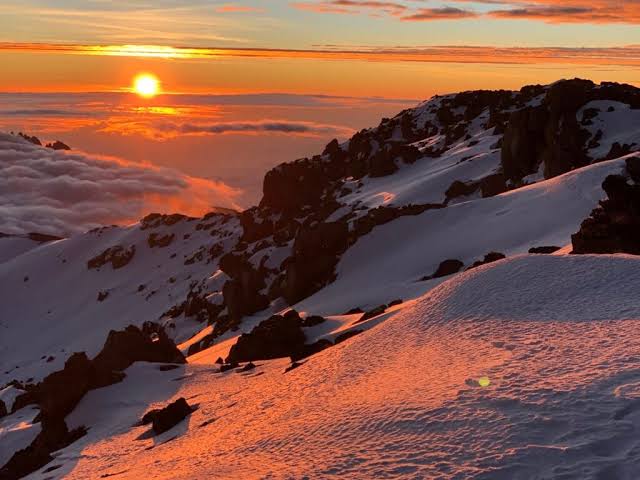
Mweka Route
The Mweka Route Kilimanjaro’s Great Descent
The Route That Brings You Home
Among the established paths on Mount Kilimanjaro, the Mweka Route occupies a unique and vital role — it is used almost exclusively as a descent route, serving as the primary path down the southeastern face of the mountain for trekkers who have ascended via the Machame, Lemosho, and several other southern circuit routes. It is, in the most literal sense, the route that brings climbers home from the summit — the final, downward chapter of their Kilimanjaro story, carrying them from the high, cold world of the upper mountain back through the extraordinary ecological zones of the lower slopes to the warmth, the green, and the life of the forest below.
The Mweka Route is occasionally used as an ascent route — primarily as part of the short, two-day emergency descent configuration that operators use when trekkers develop serious altitude sickness and need to be brought down the mountain rapidly — but its gradient is generally considered too steep and its acclimatisation profile too compressed for it to function effectively as a primary ascent route for summit-seeking trekkers. As a descent route, however, its steep, direct character is a virtue — it provides the most efficient and most rapid descent from the summit to the park boundary of any path on the mountain, and its transition through the full range of Kilimanjaro’s vegetation zones in a compressed distance creates a rapid, vivid, and deeply satisfying ecological journey that makes the descent as memorable, in its own way, as the ascent.
Route Overview: The Essential Facts
The Mweka Route begins at the Mweka Gate on the southeastern side of Kilimanjaro National Park, located at approximately 1,640 metres above sea level — the lowest starting elevation of any gate on the mountain. The gate is accessible from Moshi town, approximately 25 kilometres away by road, making it one of the more conveniently located park entries.
The total distance of the Mweka Route from the gate to the standard high camp at Mweka Camp is approximately 10 kilometres, with the continuation from Mweka Camp to the summit adding a further 15 to 18 kilometres depending on the specific summit approach. The total elevation gain from the gate to Uhuru Peak via Mweka is approximately 4,255 metres — the greatest elevation gain of any single route on the mountain, which is one of the primary reasons why it is rarely used as an ascent route.
As a descent route, the Mweka is typically walked in two stages — from the summit or Barafu Camp down to Mweka Camp at 3,100 metres on the summit day, and from Mweka Camp down to the Mweka Gate at 1,640 metres on the following morning.
Temperatures on the Mweka Route
Because the Mweka Route is almost exclusively walked on the descent — after the summit has been reached and the body is already adapted to the altitude — the temperature experience of the route is essentially the reverse of the ascent routes, with trekkers moving from the extreme cold of the summit zone progressively back into the warmth of the lower mountain.
At Barafu Camp at the start of the descent, temperatures typically range from -10°C to -15°C in the pre-dawn summit departure conditions, warming to -5°C to 5°C by mid-morning as the sun rises. On the descent through the alpine desert to Mweka Camp, temperatures warm progressively, reaching 5°C to 15°C in the upper sections and 10°C to 18°C in the lower sections around Mweka Camp. The descent through the montane forest on the second morning warms quickly to 15°C to 22°C in the lower sections, and the arrival at Mweka Gate is often accompanied by a warmth and humidity that feels luxuriously, tropically welcoming after the cold austerity of the upper mountain.
The Descent Experience: Stage by Stage
Summit to Mweka Camp
The descent from Uhuru Peak to Mweka Camp begins immediately after the summit experience — typically within fifteen to thirty minutes of arriving at Uhuru Peak, as the cold, the altitude, and the length of the return journey make a rapid departure imperative. The descent from the summit to Barafu Camp follows the ascent path in reverse, dropping approximately 1,200 metres over approximately 5 kilometres in a descent that takes typically two to three hours.
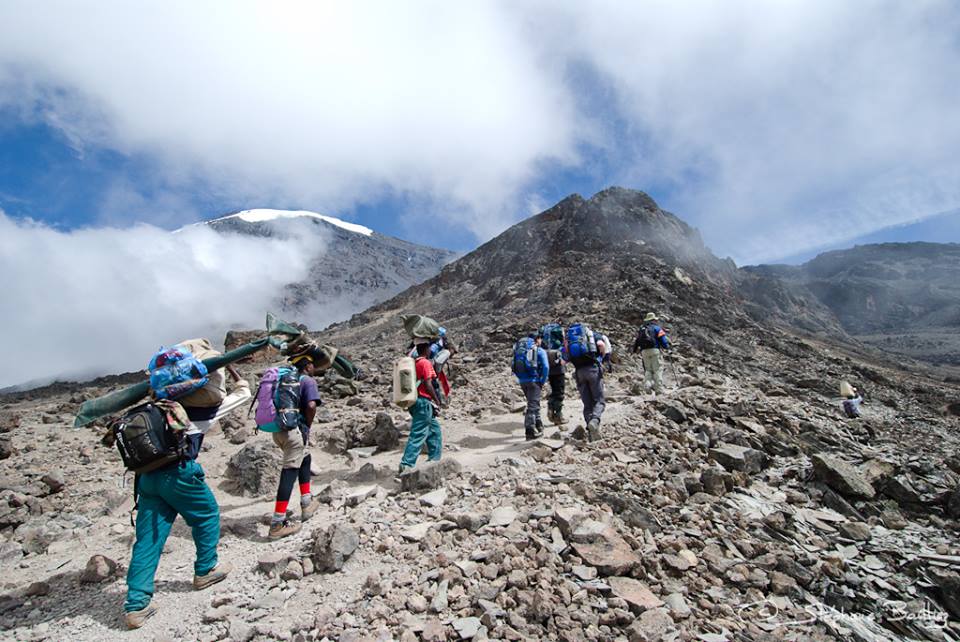
From Barafu Camp, where trekkers briefly stop to collect their gear, eat, and drink, the path continues directly down the southeastern face of the mountain in a steep, relentless descent through the alpine desert and into the upper moorland. The gradient of the Mweka Route on this section is notably steeper than most ascent routes, and the loose volcanic scree underfoot makes careful foot placement essential. Trekking poles are invaluable on this section, absorbing the impact of each step and significantly reducing the strain on knees and ankles that the long descent would otherwise impose.
The descent from Barafu Camp to Mweka Camp at 3,100 metres covers approximately 7 kilometres and descends approximately 1,573 metres in a walking time of typically three to four hours. As altitude decreases and the oxygen concentration in the air increases, a remarkable physiological transformation occurs — the headaches of altitude begin to clear, breathing becomes progressively easier, the body’s energy returns with surprising speed, and the general sense of physical wellbeing improves dramatically with every downward step. Many trekkers describe the descent from Barafu to Mweka Camp as one of the most pleasurable sections of the entire trek — the relief of moving downward, the return of physical ease, and the extraordinary transition through the vegetation zones providing a deeply satisfying and visually rich experience.
The path passes through the upper moorland — the giant groundsels and lobelias appearing again, welcome and familiar — and into the lower heathland before arriving at Mweka Camp in the forest edge at 3,100 metres. The camp is beautifully situated at the boundary between the moorland and the upper forest, with the warmth and smell of the forest below beginning to drift upward as the afternoon progresses. Temperatures at Mweka Camp in the evening are significantly warmer than at the high camps — typically 5°C to 10°C — and the relief of relative warmth after the extreme cold of the summit night and the high camps is deeply welcome.
Mweka Camp to Mweka Gate
The final stage of the descent — from Mweka Camp at 3,100 metres to Mweka Gate at 1,640 metres — covers approximately 10 kilometres and descends approximately 1,460 metres in a walking time of typically three to four hours. It is a beautiful, peaceful, and deeply satisfying walk through the heart of the montane rainforest — the same extraordinary forest ecosystem that greeted trekkers at the beginning of their journey, now encountered on the descent with a quality of nostalgic warmth and grateful appreciation that the upward journey could not quite produce.
The forest on the Mweka descent is rich, dense, and extraordinarily beautiful — enormous trees draped in mosses and lichens, shafts of sunlight breaking through the canopy to illuminate the forest floor in pools of warm, golden light, the sound of running water from nearby streams, and the constant, layered presence of birdsong from above. After the stark, cold, sublime austerity of the upper mountain, the forest feels abundantly, overwhelmingly alive — a generous and welcoming return to the warm, green, richly inhabited world of the lower slopes.
The path arrives at the Mweka Gate in mid-morning, where the final park formalities are completed, the summit certificates are presented — gold for those who reached Uhuru Peak, green for those who reached Stella Point — and the guides, porters, and cooks who have carried, cooked, guided, and supported the trek from beginning to end are tipped and thanked in the warm, celebratory atmosphere that invariably characterises the gate arrival on the final day of any Kilimanjaro trek.
The Tipping Ceremony: Honouring the Team
The arrival at the Mweka Gate marks not only the end of the climb but the moment for one of the most important and most warmly human rituals of the entire Kilimanjaro experience — the tipping ceremony. The guides, assistant guides, porters, cooks, and camp crew who support every Kilimanjaro trek are the people who make the summit possible, carrying extraordinary loads over difficult terrain at high altitude, preparing hot meals in freezing conditions, monitoring their clients’ health and wellbeing throughout the route, and contributing an indispensable knowledge, skill, and spirit of service that deserves recognition and generous reward.
Tipping guidelines published by the Kilimanjaro Porters Assistance Project and most reputable safari operators provide clear recommendations for appropriate tip amounts at each crew level, and following these guidelines and distributing tips generously and personally — directly to each crew member, with a handshake and a word of genuine thanks — is one of the most important contributions that trekkers can make to the livelihoods and the dignity of the remarkable men and women who devote their working lives to supporting the Kilimanjaro experience.
Mweka Route: A Final Reflection
The Mweka Route may lack the celebrity of the ascent routes that precede it — it appears on no route maps as a primary Kilimanjaro experience, generates no dedicated marketing, and receives none of the detailed advance planning attention that trekkers lavish on their chosen ascent path. Yet for most of the trekkers who walk it, the Mweka descent is remembered with a particular and deeply personal fondness — as the path on which the summit achievement was absorbed and celebrated, on which the body’s recovery was felt and appreciated, on which the mountain was seen from above for the last time and then gradually, lovingly, let go.
It is the route that brings you home. And in doing so, it completes one of the greatest journeys available to any person who chooses to stand on their own two feet and walk to the top of Africa.
Kilimanjaro Trips
Kilimanjaro Mountain Top Route
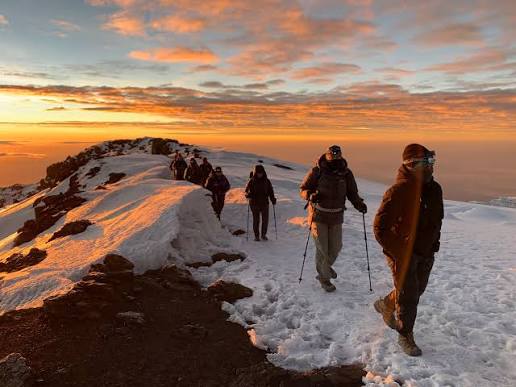
Marangu Route
Among all the paths that wind their way up the slopes of Mount Kilimanjaro, the Marangu Route holds...
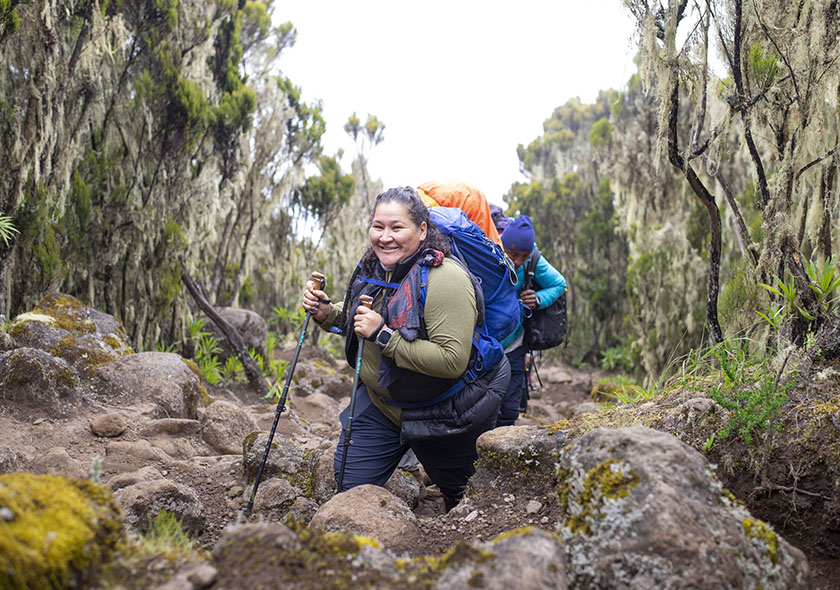
Lemosho Route
Among all the routes that ascend the magnificent slopes of Mount Kilimanjaro, the Lemosho Route occupies a position...
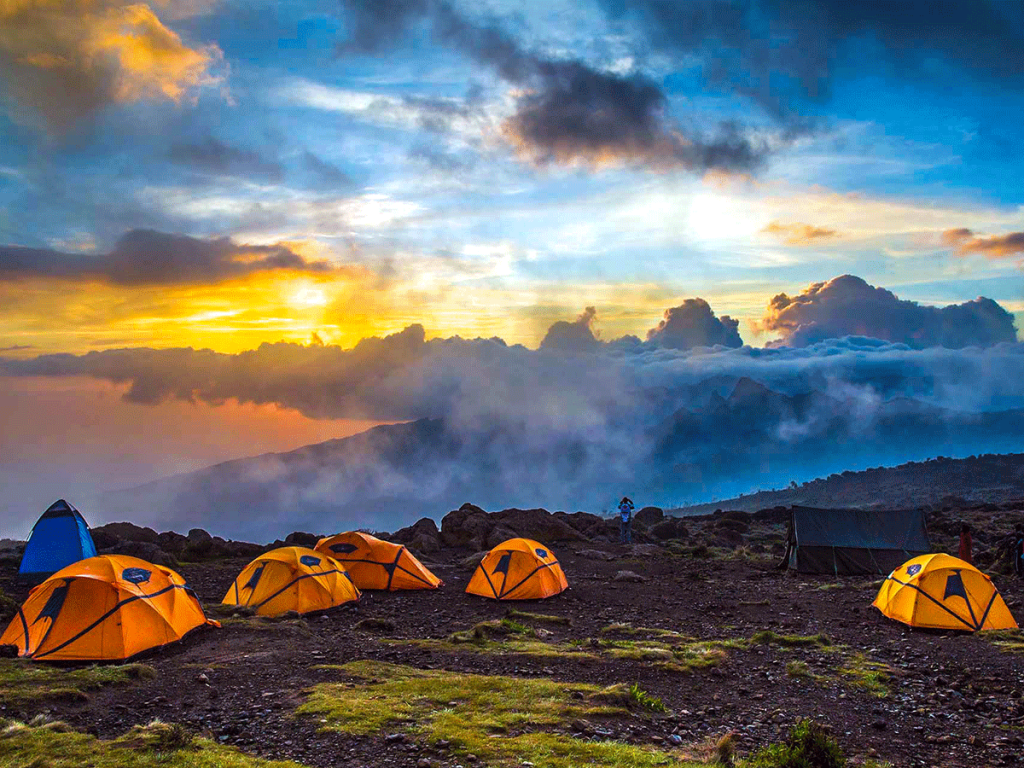
Machame Route
If the Lemosho Route is the connoisseur’s choice — the route selected by those who...
The Rongai Route
The Rongai Route is the only route on Kilimanjaro that approaches from the north, beginning near...








%20copy%203.svg)