The Ndutu calving season is one of the greatest wildlife spectacles on Earth. Each year, hundreds of thousands of wildebeest calves are born on the short-grass plains of southern Serengeti, in just a few weeks, while lions, cheetahs and hyenas watch from the edge of the herds. This guide explains when the Ndutu calving season happens, where Ndutu is, what you will see, where to stay and how to plan your trip from the USA, the UK or Europe. Grand World Tours is a locally owned company based in Arusha, and we plan Ndutu safaris with clear, honest advice.
Quick answer: the Ndutu calving season runs from about late January to March, with the peak usually in February. The best time to visit Ndutu for newborn wildebeest is February, and December to March is the wider window. Exact timing follows the rains, so it changes slightly each year.

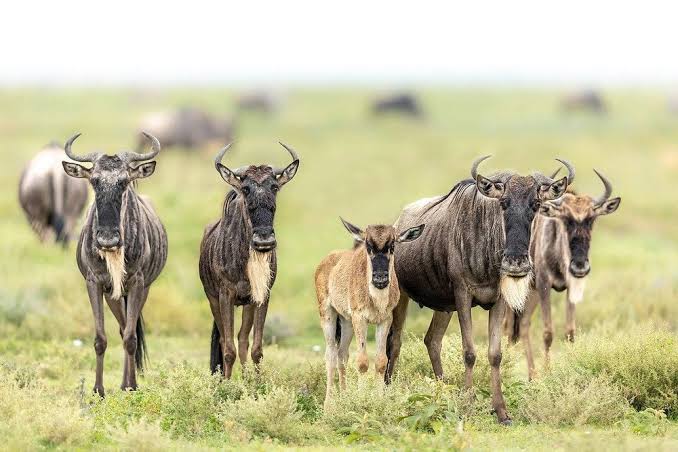
A newborn wildebeest calf on the Ndutu plains.
In this guide
What Is the Ndutu Calving Season?
Every year, around two million wildebeest, along with zebras and gazelles, follow the rains in the Great Migration. In the southern Serengeti and the Ndutu area, the herds gather on nutrient-rich short grass and give birth almost at the same time. This is the wildebeest calving season, often called the Serengeti calving season.
Calving at the same time is a survival strategy. So many calves are born together that predators cannot catch them all. A wildebeest calf can stand within minutes and run with the herd soon after, which is one of the most remarkable things you can watch in the wild.
When Is Ndutu Calving Season?
The calving season at Ndutu usually runs from late January through March. Most calves are born in a short burst in February, and at the peak, thousands can be born in a single day. The herds often arrive around December, once the short rains have turned the plains green, and begin moving north again around April.
•
•
•
Where Is Ndutu?
Ndutu sits in the Ngorongoro Conservation Area, on the southern edge of the Serengeti ecosystem, near Lake Ndutu. It is roughly a few hours’ drive from Arusha and close to the Ngorongoro Crater, which makes it easy to combine with the northern safari circuit. The landscape mixes open short-grass plains with acacia woodland, so you can find both big herds and shade for leopards and other cats.
What You Will See at Ndutu During Calving Season
•
•
•
•
•
•
Wildlife viewing at Ndutu is dramatic but real. Predators hunt, and some calves are lost. It is nature as it is, and many guests find it deeply moving.
Month by Month: The Ndutu Wildebeest Migration
| Month | What is happening at Ndutu |
|---|---|
| December | Herds begin to arrive on the green plains after the short rains. |
| January | Large herds gather, and the first calves begin to appear late in the month. |
| February | Peak calving, with the most newborns and the strongest predator action. |
| March | Many calves are already running with the herds, and the plains remain busy. |
| April | Rains begin, and the herds start to move west and north. |
Best Time to Visit Ndutu
For the Ndutu calving season, February is the best month, with the highest chance of newborn calves and predator activity. If you prefer fewer vehicles, early March is a good choice, and late January suits travellers who want to see herds before the main birth peak.
•
•
•
•
Because the herds follow the rains, no operator can promise exact positions. We check recent herd movements before your dates and choose camps to match.
Where to Stay in Ndutu
Accommodation near Ndutu is limited and fills quickly in January to March, so book early, often many months ahead. The main choices are:
•
•
•
How Long to Stay and Sample Itinerary
We suggest at least two to three nights at Ndutu, so you have several game drives and a chance to find the best herds. A typical week combines Ndutu with other highlights:
•
•
•
•
•
You can extend this by continuing to the central Serengeti, or add a few days on Zanzibar. See our Great Migration safari page for more ideas.
Getting to Ndutu From the USA and Europe
Most guests from the USA, the UK and Europe fly into Kilimanjaro International Airport (JRO) near Arusha, often connecting through a hub such as Amsterdam, Doha, Istanbul or Addis Ababa. Others fly into Nairobi and transfer by road or short flight. Route options change, so check current schedules when you book.
•
•
•
•
Tips for Your Ndutu Calving Season Safari
•
•
•
•
•
•
•
Why Pick Grand World Tours for Your Ndutu Safari?
Grand World Tours is a locally owned company based in Arusha, operating in Tanzania, Kenya and Zanzibar, with trusted partners in Uganda, Namibia and South Africa. Our founder began as a professional safari guide, so we plan every calving season safari around real experience in the field.
•
•
•
•
•
For official information, visit the Ngorongoro Conservation Area Authority and Tanzania National Parks. The Serengeti is also a UNESCO World Heritage Site.
Frequently Asked Questions About the Ndutu Calving Season
When is the calving season in Ndutu?+
The Ndutu calving season usually runs from late January to March, with the peak in February. The herds follow the rains, so dates vary slightly each year.
What is the best month for Ndutu calving season?+
February is usually the best month, with the most newborn calves and the strongest predator action. Early March is quieter, and late January suits travellers who want to see herds before the peak.
Where is Ndutu?+
Ndutu is in the Ngorongoro Conservation Area, on the southern edge of the Serengeti ecosystem, a few hours’ drive from Arusha.
How many wildebeest calves are born at Ndutu?+
Hundreds of thousands of calves are born within a few weeks, and thousands can be born in a single day at the peak. Exact numbers vary each year.
Is Ndutu worth visiting for the calving season?+
Yes. Many travellers consider it one of the best wildlife experiences in Africa, with newborn calves, large herds and strong predator activity in one place.
How many days do I need at Ndutu?+
We suggest at least two to three nights, so you have several game drives and a good chance of finding the best herds.
Is the Ndutu wildebeest migration the same as the Great Migration?+
Ndutu is one stage of the Great Migration. The herds spend the calving season in the south, then move north and west through the Serengeti later in the year.
Can I see the river crossings at Ndutu?+
No. The river crossings happen in the northern Serengeti and the Mara, usually from about July to October. Ndutu is for calving season.
What should I pack for Ndutu in February?+
Light layers, a warm jacket for cool mornings, a hat, sunscreen, binoculars and a rain layer, since short showers are possible.
How far ahead should I book?+
Book as early as you can, often many months ahead, because the best camps near Ndutu fill quickly from January to March.
Plan Your Ndutu Calving Season Safari
Ready to see the Ndutu calving season? Tell us your dates, your group size and your budget, and we will send a clear proposal with camps matched to the herds.